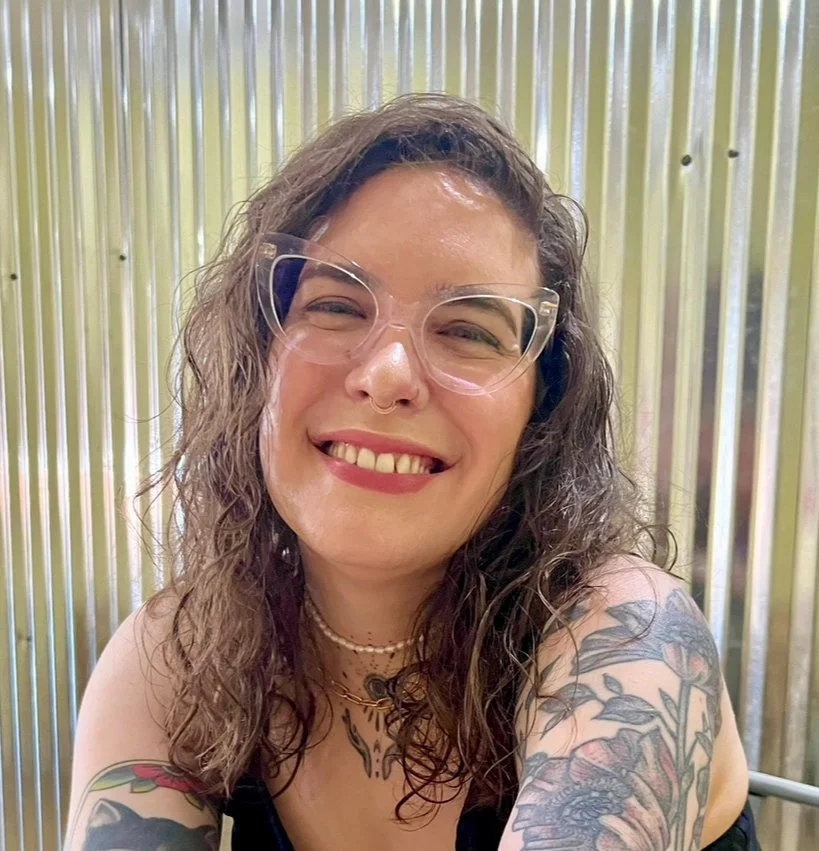
Hi, I’m Lina.
My path to becoming a psychodynamic therapist was anything but linear. It grew out of years of living and working across cultures, languages, and very different social worlds—and from a longstanding curiosity about what shapes us beneath the roles we learn to play.
I grew up in public housing outside Paris as the daughter of a Puerto Rican immigrant. From an early age, I was exposed to different ways of thinking about healthcare, authority, community, and what it means to belong. Living in several countries and often occupying the position of an outsider taught me to pay close attention to what is said, what is left unsaid, and how much of who we become is shaped by the worlds around us.
Those experiences continue to inform how I think about identity, belonging, alienation, relationships, and the ways we adapt to survive—and what happens when the adaptations that once protected us no longer fit the lives we are trying to build.
Before becoming a therapist, I worked in political marketing, translation, and restaurant management. Each of these worlds taught me something about people: how we communicate, how we perform competence, how power operates in relationships, and the emotional work involved in navigating other people's expectations.
Today, I provide psychodynamic psychotherapy in English, Spanish, and French, both online and in person. I am licensed to practice in New York, New Jersey, and Texas, and I see clients in person in White Plains, New York.
My approach is thoughtful, curious, and collaborative. Together, we look beyond the immediate problem to understand the patterns, relationships, experiences, and assumptions that have shaped how you move through the world—and whether they still serve you.
MY POV
Soft. Strong. Messy. Brave. Tired. Enough. Always enough.
Soft. Strong. Messy. Brave. Tired. Enough. Always enough.

Soft. Strong. Messy. Brave. Tired. Enough. Always enough.
Soft. Strong. Messy. Brave. Tired. Enough. Always enough.
I believe much of our suffering begins when we become disconnected from ourselves—when we learn to prioritize being acceptable, successful, needed, or safe over being fully ourselves.
Sometimes that disconnection begins with trauma or early relationships. Sometimes it develops through family expectations, culture, relationships, or environments that reward achievement and adaptation while leaving little room for uncertainty, anger, desire, or difference. We learn to silence certain needs, contain certain emotions, and become versions of ourselves that make sense to the people around us.
These adaptations often serve an important purpose. They help us belong. They help us succeed. They help us survive. But what once protected us can eventually leave us feeling anxious, exhausted, conflicted, or strangely disconnected from a life that looks perfectly fine from the outside.
I don't see symptoms as defects that need to be eliminated. I see them as meaningful signals—ways your mind and body may be communicating that something needs attention. Rather than asking only, How do we make this go away?, we can ask, What is this trying to tell us? and What has it been protecting?
My work is relational and psychodynamic. We look closely at the patterns you bring into relationships, the assumptions you have developed about yourself and others, and the things that may be happening beneath your conscious awareness. The therapeutic relationship itself becomes part of the work—a place where these patterns can be noticed, understood, and experienced differently.
At its deepest level, therapy is about becoming more fully your own. It is about questioning the expectations and adaptations that have shaped you, making room for parts of yourself that may have been pushed aside, and developing a more honest relationship with your own desires, limits, and values.
The goal isn't to become someone new. It is to become less divided, more free to choose, and more at home in the life you've built—and in the person you've become.
Soft. Strong. Messy. Brave. Tired. Enough. Always enough.
Soft. Strong. Messy. Brave. Tired. Enough. Always enough.

9 things about my therapy style
*Vulnerable is the most powerful thing you can be
*Therapy is political
*Sometimes, the answer is clear, we just don’t want to hear it
*Nothing is irrelevant to therapy
*The revolution is inner
*Friends are family too
*Swearing is a sign of intelligence and authenticity
*I have been in therapy most of my life and I know firsthand how transformative it can be
*My cats make regular cameo appearances for quality assurance purposes